





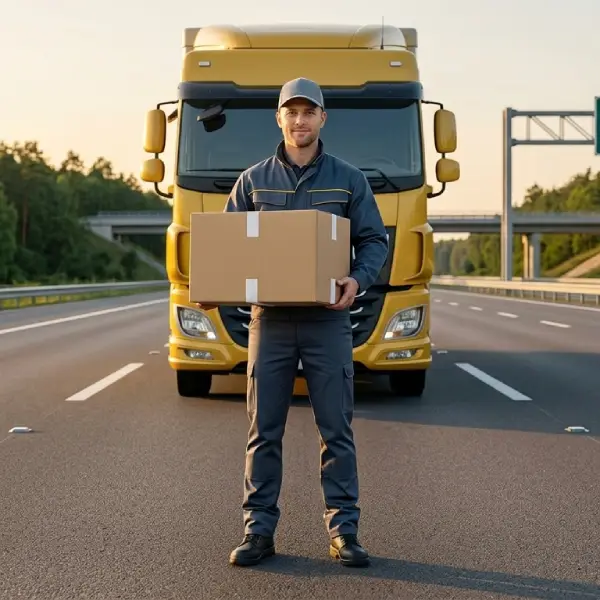

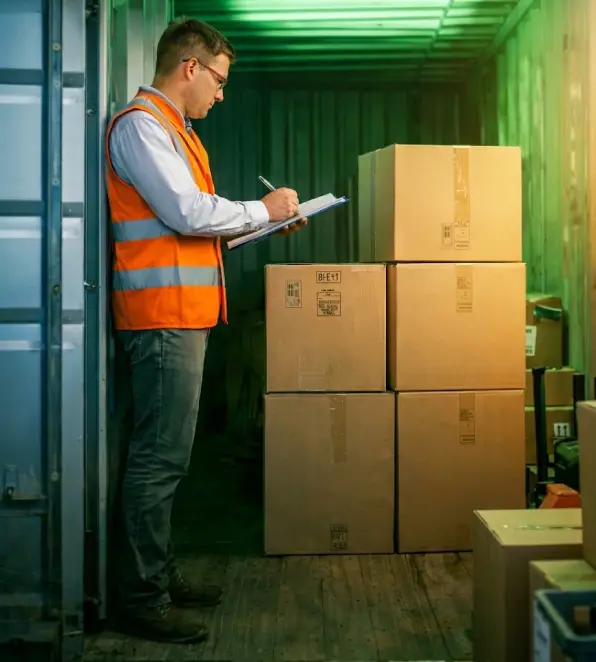

LTL shipping across Kazakhstan means a batch travels on a truck together with other shippers’ cargo, and payment is based on the space actually occupied. A shipment can start from a single pallet or a few boxes: a full truckload is not required. Departures on core routes run daily from Almaty and Astana, cargo is collected at the address and delivered to the recipient’s door. Shipments are insured and the status is tracked by waybill number.
Key facts
- Payment only for the space or weight actually used.
- Shipments from a single pallet or several boxes.
- Daily departures on core routes.
- Pickup at the address and delivery to the recipient’s door.
- Batch preparation at the warehouse before dispatch.
- Cargo insurance and tracking by waybill number.
How LTL shipping works
Shared loading. One truck carries batches from several shippers travelling the same route. Each pays for their own portion rather than the whole vehicle, which makes delivery of small volumes affordable.
Receiving and preparation. Cargo is collected at the address or received at the warehouse, pieces are counted and the packaging is checked. Where needed, small pieces are assembled on a pallet and secured.
Forming the run. Batches are consolidated and leave on the nearest scheduled departure. On popular routes trucks are formed daily, so there is no long wait.
Delivery to the recipient. In the destination city cargo is distributed by address or released at the warehouse. The final leg is covered by the company’s regional representatives.
When the LTL format is more efficient
The choice between shared loading and a dedicated truck is driven by batch size and timing requirements. Typical situations are set out below for comparison.
| Situation | Suitable format | Why |
|---|---|---|
| A batch of one or two pallets | Shared loading | A dedicated truck is not justified at this volume |
| Cargo fills more than half the trailer | Dedicated truck | A direct run without transshipment is often more efficient |
| A deadline tied to a specific hour | Dedicated truck or urgent dispatch | An LTL run depends on the schedule |
| Regular small deliveries | LTL on a schedule | Predictable costs and steady dispatches |
| Fragile goods without packaging | Dedicated truck | On an LTL run the batch passes through transshipment |
The boundary between formats usually runs along truck utilization: while a batch fills less than half the trailer, LTL is almost always cheaper. As volume grows the difference narrows, and a direct run becomes not only faster but more practical, since it removes intermediate transshipment and the risk of damage.
What affects cost and timing
Several factors matter before dispatch. In the LTL format the price is driven not only by weight but by how much room the batch takes on the truck.
| Parameter | How it affects the shipment | What to clarify in advance |
|---|---|---|
| Volume and weight | The calculation uses the greater of the two | Dimensions and weight of each piece |
| Shape of the packaging | Irregular pieces take up more space | Whether palletizing is possible |
| Handover time | Determines whether the batch joins the current run | The cut off time for accepting cargo |
| Route | Departure frequency varies by direction | Destination city and recipient address |
| Fragility of the goods | Requires packaging that withstands transshipment | Nature of the cargo and type of container |
A frequent reason the quote differs from expectations is bulky but light cargo: the tariff is calculated by volume while the shipper reasons by weight. The second is irregular dimensions: a box of non standard shape takes up more usable space than its actual volume, so palletizing sometimes lowers the final cost.
Who LTL shipping suits
Where the format works best. Shared loading is designed for shippers who move goods regularly and in modest volumes. It allows goods to be sent as needed rather than accumulated to truckload size, so no excess stock sits at the warehouse and logistics costs stay predictable.
Small stores and suppliers. Regular deliveries of one or two pallets without maintaining a vehicle.
Production sites. Shipping components and assemblies to branches and sites when the volume does not justify a dedicated truck.
Online stores and private shippers. Transferring batches to regional warehouses and pickup points, plus furniture, appliances and personal belongings during a move.
How to prepare cargo for an LTL dispatch
Preparation affects the price. In the LTL format you pay for space on the truck, so the shape of the batch matters as much as its weight. Cargo assembled neatly and palletized takes up less usable volume than the same items loaded loose.
Pack with transshipment in mind. On an LTL run the batch is moved at the warehouse and inside the truck, so boxes must be rigid and fragile pieces protected.
Assemble small pieces on a pallet. Palletizing speeds up loading, simplifies counting and reduces the risk of damage.
Label the pieces. Marks help avoid mixing the batch during sorting at the warehouse.
- Clarify the cut off time for handing cargo to the nearest run.
- Report oversized pieces in the batch.
- Decide between door to door delivery and release at the warehouse.
- Agree who pays for the shipment.
- Check whether unloading by the carrier is required.
What foreign shippers should know about LTL here
Distances change the packaging math. An LTL run between Kazakhstani cities covers far more ground than a comparable shared load in a compact market, and the batch spends longer in transit and in handling. Packaging that would survive a short European leg is often not enough here.
The final leg is part of the format. Delivery does not stop at a terminal in the destination city: the batch is distributed to the recipient address, and for destinations outside regional centers that leg is planned separately.
What determines shipping terms
Space occupied. The basis of the LTL calculation: you pay for the room taken on the truck.
Route and delivery leg. The direction and the distance to the recipient’s address determine the cost of the final section.
Cargo preparation. Palletizing, packing and labeling are quoted separately.
Additional work. Pickup at the address, unloading and storage beyond the free period are added to the calculation. Final terms are set once the shipment parameters are confirmed.
How an LTL shipment is dispatched
1. Request and quote
Route, a list of pieces with weight and dimensions, recipient details and the required timing are provided. The space occupied is calculated.
2. Pickup and receiving at the warehouse
A truck is dispatched to the address or the cargo is brought to the warehouse. Pieces are counted, a waybill is issued and palletizing is done if required.
3. Forming the run
The batch is loaded onto a truck together with other shippers’ cargo and leaves on the nearest scheduled departure.
4. Delivery to the recipient
In the destination city cargo is distributed by address or released at the warehouse. After handover the documents are closed.
Why companies choose this arrangement
Affordable cost for small batches. Payment for the actual volume makes it possible to move small deliveries regularly.
Daily departures. Trucks on core routes are formed every day, so the wait is short.
Full cycle with one provider. Pickup, transit and door delivery are performed by the company and its representatives.
Cargo prepared at the warehouse. Palletizing and packing happen before dispatch, which lowers the risk of damage.
Key advantages
- Payment only for the space or weight actually used.
- Shipments from a single pallet or several boxes.
- Daily departures on core routes.
- Pickup at the address and delivery to the recipient’s door.
- Palletizing and packing before dispatch.
- Cargo insurance and tracking by waybill number.
Frequently asked questions
What is the minimum volume for an LTL shipment
Shipments are accepted from 1 kg: from a few boxes to several pallets. There is no lower volume limit, so the LTL format suits both trial deliveries and regular small dispatches. The calculation uses the greater of the weight and volume figures.
Why is LTL cheaper than a dedicated truck
The cost of the run is split among several shippers, each paying only for the space occupied. With a dedicated truck one client pays for the whole vehicle regardless of how full the trailer is. The difference is most noticeable for batches that fill less than half the truck.
How often do LTL trucks depart
On core routes trucks are formed daily, so a batch does not wait long for consolidation. Cargo handed over before acceptance closes leaves on the nearest run, otherwise on the next one. Frequency on lighter routes is confirmed when the request is placed.
Is transshipment safe for the goods
Cargo is moved at the warehouse and inside the truck, so packaging requirements in the LTL format are higher. Fragile pieces are packed rigidly and small items are assembled on a pallet and secured. With proper preparation the risk of damage is low, and for particularly sensitive goods a dedicated truck without intermediate unloading is preferable.
Can LTL cargo be sent abroad
Yes, the LTL format also works on international routes: to Russia, Kyrgyzstan and Uzbekistan. The difference lies in the documents: an international dispatch requires a set prepared for the specific route, and preparation takes longer than for a domestic shipment.
How does LTL differ from consolidation
An LTL truck carries cargo belonging to different clients travelling the same route. In consolidation a single batch is assembled from one client’s goods arriving from different suppliers or at different times. LTL solves the shared loading task; consolidation solves the accumulation task.
Arranging an LTL shipment
For a quote, provide the route, a list of pieces with weight and dimensions, and the recipient details. Other formats are collected in freight transportation across Kazakhstan and the CIS, batch accumulation is described in cargo consolidation, and urgent tasks are covered in express freight delivery.
 Available 24/7